Don’t short-change the magic! Create it!

I like it! Where did you get it? It’s one of the first questions we ask when we see something we like. But the real question we are asking is: Where can I get one?  Whether it’s a pair of shoes or a new gadget; if we like it we’re going to want one, or twelve!

This is true about many things in life we admire. It’s not that we want to be carbon copies of others. It’s that quite often we lack confidence in our own ideas and creativity. So we borrow them.

The real truth is that sometimes we short-change the magic just looking to others. Quite often, the best ideas will come from our own well-spring.

Here is something to consider: The essence of innovation is just doing something we already do but finding a new way to do it. It’s why technology has been so successful.

We’re doing the same things. We are just doing them differently; and, with far greater ease and reach.

So where do the best ideas live? Two of the best sources we’ve talked about: people and technologies.

But don’t just look at those as the surface answers. Use those ideas creatively. Pick them up and take them to a new place (your place!) and see how they fit. You might be surprised how one simple change makes a dramatic difference. Your difference.

Here’s another source to consider: Perceived failures. Many of the best ideas found their value in something other than their original intent. We’ve all heard the story of Thomas Edison saying he didn’t fail 999 times before he invented the light bulb. He just found 999 ways that didn’t work. But the part about not working was only for that one purpose. Many of those 999 (failures?) were innovations we still use today. In fact, for 389 of them he applied for and received patents.

Here’s the challenge: Let’s change the question. Instead of asking where can we get [that], let’s press for possibilities and ask: What can WE CREATE with [that]?

Live (create) today like you want tomorrow to be. Live (create) well.

Looking for your passion? Try backing in…

There are some people who seem to be born knowing what they want. They have a very clear vision for their life, particularly in their work. There are others who have no notion of what they want and as a result, all too often settle into a life that may be less than fulfilling and does not challenge them beyond whatever level they find themselves.

There is a third group that are driven but do not have a clear concept of how that might translate. There are twists and turns that are less about direction than they are challenges for greater depth and meaning. Because of this it can appear on the surface not to be as progressive in terms of aspiration. This group does not necessarily pursue to rise to the top as it were. Instead, they strive to continuously be pushing to their next best, whatever that may be.

The journey here can be more circuitous than on a steep arc and for those of us on this path that suits us fine. It is after all about the journey, not the climb. As you might have guessed, this is the group where I find myself.

Part of my struggle with this has been how we measure progress. There is still a definite pursuit for excellence. Mastery remains paramount. But it is the fascination of the work that draws us in and holds us. It is a personal measure and expectation.

This can be a challenge to describe to others that expect us to detail out long term goals and ambitions. We most likely do not know where the path is going to take us next. We have learned to bring our best selves to the flow of the river of life and look forward to its current as it takes us to what is next rather than plotting it out.

Recently I heard this put in a way that I thought described it perfectly. The speaker was Brian Tracy, an acknowledged and noted authority in the field of personal leadership and development. He is crystal clear in his teachings about the value of having goals. They are massively important. But his views on passion were refreshing. In his description, he said that we do not pursue passion nearly as much as we back into it. We do not “find” passion and pursue it nearly as much as we find work we become passionate about in the doing of it. That has a very strong ring of truth.

live todayThe key it would seem is to be doing. To allow ourselves as Einstein taught to look for what is rather than what we think should be. We must pursue value over rungs of the ladder of success.

We must be willing to move beyond who we think we should be in order to become all we can be.

This reminded me of one of my favorite thoughts from the Austrian poet Rainer Maria Rilke:

“Have patience with everything unresolved in your heart and try to love the questions themselves, as if they were locked rooms or books written in a very foreign language. Don’t search for the answers, which could not be given to you now, because you would not be able to live them. And the point is to live everything. Live the question now. Perhaps then, some day far in the future, you will gradually without even noticing it live your way into the answer.”

Live today like you want tomorrow to be. Just that. Live today. Live well.


Excellence as the new perfection – 3 questions to get you there

Excellence has long been my objective. I was captivated by Tom Peters and Nancy Austin’s work in A Passion for Excellence. Having standards and expectations of quality are important and productive values.  There is no question in my mind that good can be the enemy of great. I have seen far too many people settle at a level of performance that did not leverage their full potential. We should not let anything prevent us from stretching to the remarkable, from aspiring to whatever pinnacle matters to us in terms of achievement.  But we also need to remember that excellence is not the same as perfection. It is easy to get them confused, especially if you are a perfectionist by nature. Because when it comes to perfection, excellence will always be the better measure.

As a recovering perfectionist, this is a place I can still struggle.  When is good really great and I just don’t recognize it?  When is good enough, good enough?  There’s an art to knowing.  More importantly, there’s significant value in knowing.  When I find myself struggling with what I call my “analysis paralysis” I have learned to turn to what I call my three “freedom” questions as a way to move beyond where I am.

Question #1:  Will what I have get the job done?  (If yes – it’s finished.  If no – what is left to do? I then focus only the minimum steps left.)

Question #2:  What will happen if I let it go as it is and it needed more work?  (Usually – nothing.  Sometimes – something.  If something, then I close the risk gap but only that.)

Question #3:  What was my original intention for the work and what is it costing me to not be finished?  (This is often where I come face to face with where I’ve allowed my motivation to shift out of focus. With that lens adjustment, the need for results overpowers the need for false perfection.)

It’s pretty simple.  It’s either enough or it’s not.  It is also important to remind ourselves that perfection is a false measure.  It’s not universal.  It’s not evergreen.  It’s not real.  But let’s face it, we each continue in our own ways at times to pursue it. Let’s try a better way. Let’s make excellence our new perfection. Let’s dismiss that false taskmaster and focus instead on excellence by generating value for ourselves and others.  It’s an amazing freedom.  And in the end, produces higher quality work because we focus on specific, tangible, measurable and attainable standards.

Where do you pursue perfection?  What would you be able to accomplish if you traded in perfection for excellence?  Amazing things.

Live today like you want tomorrow to be. Live well.

The many returns of the day, Part 4 – What is your ROE?

Return on EnergyWelcome back! We are continuing our conversation about achieving a positive rate of return on our investments outside of invested cash.

Even though this is our final segment in this series, I hope that the conversation itself will not end here.

Our investments and intentions for them are a critical part of how we achieve the life and work that is most rewarding for us in any given season in our life.

In this segment we are talking about ROE or Return on Energy. This was covered briefly in our last segment where we talked about relationships and the “E” factor within those investments. However, since energy goes well beyond relationships, it merits its own spotlight in the series.

Just as with learning and relationships, the first place we look at is not the return, it is the investment. Our investment in energy includes three areas: Physical, mental and spiritual.  Quite often we fail to really consider the source of our energy and what best serves us.

Physical energy may require some active review for you. One of the best ways to do this is by keeping an energy log for a week. Make a note of your energy level on a scale of 1 to 10 every hour. Keep this simple – just a simple note in a log you keep in a small notebook or even in your favored personal electronic device. I kept mine in my phone when I first did this.

It’s important to do this at a minimum of every hour so that you can later see patterns. A word of caution: Do not try and interpret your entries until the end of your logging period. Then look for trends. Is your energy higher in the mornings or evenings? Do you see any correlation to eating and energy? Are particular days of the week standing out as higher or lower?

Look for both the high and low spots and consider what is routinely happening. This will begin to paint the picture for you and distinguish where you will see changes related to your diet, physical activity levels, rest and hydration. You may want to also consider a tool such as a Fitbit or an app to help you monitor for these activities.

The log will also begin to show you where mental energies are manifesting in your physical realm.

One discovery of value for me from this was energy within the context of introvert and extrovert personalities. The basic difference is where energy is most quantifiably sourced. When I first went through this logging experiment is how I realized that I am in fact an introvert. I have a natural love of people and value my leadership roles. I would not have ever considered myself an introvert. But the logs showed otherwise. Solitary activities spiked my energy. Group activities depleted my energy.

If we know where we get the fuel, we can frequent those resources with the right expectation and level of investment. And if we know where our energies deplete, we can also better manage those investments as well.

The spiritual aspect of investment is one that is often overlooked as we may not recognize that the energy of our spirit is in fact the most critical. We can overcome lags in our physical or mental energy by leveraging our spiritual energy. If it were a rock, paper, scissors contest, spiritual energy would always trump the rest.

How do you invest in your spiritual energy? Some of the most effective ways for me have been journaling, prayer, meditation, spiritual readings and music. What fills your spirit? Go to that well and invest.

Remembering that there is risk and reward for all of our investments is the key to achieving the success we want in our life and work. Whether it is about our money, learning, relationships or energy it comes down to the same factors. Our results are a reflection of our priorities and choices.

Live (invest) today like you want tomorrow to be. Live (invest) well!

Have you read the book?

The news and social media threads have been filled lately with excitement about a particular movie. A movie many have been anticipating for a very long time.

No one wanted any spoilers for this one. In fact, several people even posted that if you were the one that did “spoil” it for them, you would be immediately and unceremoniously unfriended.

We love our heroes, even our villains and their stories.

Movies bring them to life sometimes in ways we might not quite have the imagination to conjure.

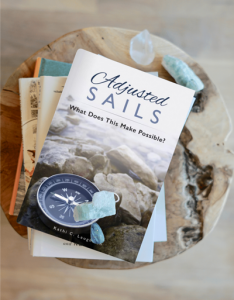
But my first question is usually about the book.

Many (most) movies have their origins in a book.  Sometimes the story translates well into the film media and sometimes it does not.  When it does not it is usually because of one of two factors:

  • The story line is changed in some material way by the omission of a character or scenes in order to address constraints of the film format for length/budget that results in gaps in the story; or,
  • Something within the story is materially changed due to cast selection, location, or other visual factors that when left to the imagination of the reader, were more relatable.

One thing that I have learned as a writer is that when artists create something it is fully integrated with their point of view whether the work is written, recorded, or other mediums.  It can be a challenge to allow someone else to fill in our blanks, whether that person is our reader or someone repurposing the work in another medium. Rather like someone telling us about the movie and how it ends before we’ve had a chance to see it for ourselves.

Consider visual art.  Each viewer can interpret it differently.  It’s not likely that they will interpret the work according to the artist’s intent.  That is really at the heart of this area of discussion – what needs to be honored most?  Is it the artist’s original intention or the freedom of interpretation of the consumer? More importantly, which should we encourage?

In my mind, the answer is straight forward.  The interpretation of the consumer will always trump the artist’s intent.  A reader’s response is no more predictable than someone sitting in a theatre watching the story unfold.  We each bring our own perspective and lens into the mix. That’s part of the beauty of the human experience.

When we are the creator, we must do what it is we do best and learn to develop and trust the right circle of collaboration, including our audience.

It is what works best with anything.  We are responsible to do our finest work.  The ultimate objective after all is to meet the audience where they are and then transport them to where they want to go.  Once we realize that they (our audience) are in fact our silent co-creator it becomes easier to make the space for them to be effective in their role. We may provide the conveyance, but ultimately they choose their own destination.

More than any other lesson in life, this one has been most challenging for me. I want to focus on the result, on the response. That’s not where we do our best work. Our best work is born from the creative process and focusing there. Allowing ourselves (and our audience) the surprises that will unfold. That is what I am looking forward to in the coming year above all else. The surprises in store. The transformations we will create together.

Live (create) today like you want tomorrow to be. Live (create) well.