Do you struggle with resilience? 3 warning signs to consider

ResilienceIt’s easy to say that we are resilient. It’s much more challenging to live resiliently. It is one of the most important skills we need to develop. But all too often we wait until we need it to determine if we’ve got it. The reality is that it doesn’t work that way.

Like any skill, it has to be developed over time and begins with our mindset. How we perceive our world will determine how we interact with it.

That is the core essence of true resilience. We stop responding to our world and start interacting with it. We put the energy of what is happening around us to work. We harness that energy and create new opportunities. It is what I have come to think of as moving from powerless effort (responding) to effortless power (resilience).

Recently I have been part of some discussions around resilience and how we develop it. The initial questions focused on how we could determine if it is a skill we have honed or not. After all, it’s not something you can always measure or see until after it has been employed. From those conversations, we determined that there are some warning signs that may be indicators that we need to strengthen that muscle. Here are the top three:

#1 – You have a higher commitment to the plan than you do to the result.

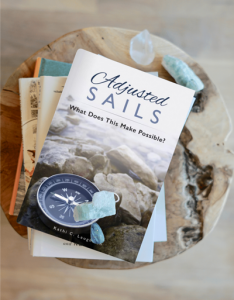
It can be dangerous to become overly attached to the road map. After all, roads close and things change. But the end goal is still the end goal. Adjusting the sails is far better than ignoring that the course needs correction.

#2 – You have a driving need to understand the cause of something in order to assign blame, even (or especially) if it’s to yourself.

Things happen. The cause is most likely irrelevant once it happens. The true forward course is not assigning responsibility for why it happened but rather taking responsibility for what to do from there. What does this make possible? Take responsibility for that and it shifts to opportunity thinking.

#3 – Your goal list is continuously littered with casualties that don’t seem to ever cross the finish line.

When we find a trend line in something, it means there is a systemic issue causing a particular result. When the trend we see is unfinished work or unrealized goals, it usually means that we are not able to see our way through disruptions, delays or even simple distractions. By analyzing the points where we falter, we can see where we need to shore up our resiliency muscle and put intelligent creativity to work.

When we are committed to seeing the possibilities around us we naturally begin to develop our personal resiliency. Our life lens is trained to see opportunities for growing and giving in every situation. In a world where we are faced every day with uncertainty, we can thrive knowing that what is uncertain leaves room for infinite creativity.

What if the glass half empty is also half full? What if it’s both and ready for more?

Live today like you want tomorrow to be. Live well.
Starting at the bottom: Getting the foundation right

Recently I have been spending time thinking about my home. After many years of sacrifice and living in places owned by other people, I experienced a special pride when they handed me the keys. The house was mine. Even though that moment was twenty years ago, I remember it like it was yesterday.

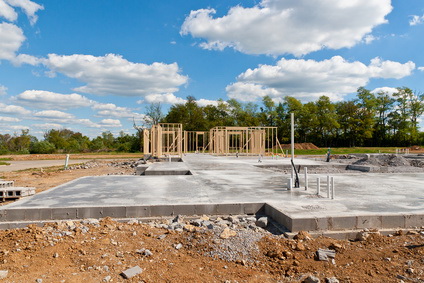
New house construction on slab foundationAs the original owner, I had the privilege of watching the house go from blueprint to punch list.

There were many life lessons during that process but none more profound than those around the importance of having a sound foundation. Everything about the house’s possibilities started there.

I remember going to the property soon after the foundation slab had been poured. My daughter Lauren and I walked around imagining walls and windows. We were creating a vision for our life standing there on that bit of concrete.

The foundation was giving shape to everything that would come.

My time recently has also been focused on continuing to deepen my understanding of resiliency for the book I am currently writing. I’ve come to understand that resiliency begins the same way our house did. It is our personal foundation that gives shape to everything that will come. Everything in our life vision begins in having a foundation that can support it. Of everything that serves us as we experience life, this is the most fundamental. When the foundation is right, the house of our life will stand. It will need maintenance and care, even some significant attention over time; but to stand, it begins with the right foundation.

And that’s where resiliency lives. It is right there in the foundation. Because knowing what we stand on, what we value and care about is in fact the beginning of  resiliency. Once you know what you are building, choices are clearer.

The reality is that resiliency isn’t about endurance or perseverance as many believe although it can foster both. What resilience is really about is transformation. In short, it is the true genesis for living a fulfilled and enriched life. It protects our joy in life. Because when we are resilient, we take what happens in our lives and USE it. We don’t simply endure it. We transform our lives with it by defining its purpose as something that serves us and what we value.

Whatever our values may be, we can find our own resilience muscle there. Whatever may happen in life, there is something in each situation that can honor what we value if we seek and embrace it. And from there, we can always build again.


Making the leap from hope to faith

If you want someone to act, give them hope.  That is the cornerstone of every effective plan in existence.  Regardless of inspiration or idea, for us to act, we need to have sufficient hope that there can be an outcome that we want.

By definition, hope is the belief that something can be true or can happen.  It is possible.  It may not be probable but it is possible.

What we must realize is that we want that assurance before we invest ourselves. Before we do the work. Because some work is pretty daunting.

The greater the hope, the greater the chance will be that we will actually take the necessary steps and make the sacrifices.  There is a price for every promise after all.

There is more to the miracle of results though. Because hope without faith is not enough. Hope is different from faith. Its shift may be subtle but its important. It is in the combination we find the magic that makes the real difference.

When we have hope, we believe it can happen.  But when we have faith, we believe it will happen.

That’s true motivation.  It goes beyond the initial leap.  It is walking the tight-rope of life knowing you are going to make it through.

Hope can help us take the first step, but only with faith will we keep walking.

I find that I’m not as careful with hope as I am with faith.  Hope is easy.  Faith takes work.  But faith is where the promise comes true.

Where do you need to take the leap and get on the tight-rope of faith? Are you ready to go from  “I can” to “I will”? Once you are, before you know it, you will be saying “I am.” Two of the most powerful words in our personal language arsenal. I am.

What I love about the process is that the more we do this, the easier it gets to really believe and have faith in what we can do – the difference we can make not just in our own lives but in the lives of others and ultimately in the world.

Live today like you want tomorrow to be. Have hope. Practice Faith.

Live well.

Looking for your passion? Try backing in…

There are some people who seem to be born knowing what they want. They have a very clear vision for their life, particularly in their work. There are others who have no notion of what they want and as a result, all too often settle into a life that may be less than fulfilling and does not challenge them beyond whatever level they find themselves.

There is a third group that are driven but do not have a clear concept of how that might translate. There are twists and turns that are less about direction than they are challenges for greater depth and meaning. Because of this it can appear on the surface not to be as progressive in terms of aspiration. This group does not necessarily pursue to rise to the top as it were. Instead, they strive to continuously be pushing to their next best, whatever that may be.

The journey here can be more circuitous than on a steep arc and for those of us on this path that suits us fine. It is after all about the journey, not the climb. As you might have guessed, this is the group where I find myself.

Part of my struggle with this has been how we measure progress. There is still a definite pursuit for excellence. Mastery remains paramount. But it is the fascination of the work that draws us in and holds us. It is a personal measure and expectation.

This can be a challenge to describe to others that expect us to detail out long term goals and ambitions. We most likely do not know where the path is going to take us next. We have learned to bring our best selves to the flow of the river of life and look forward to its current as it takes us to what is next rather than plotting it out.

Recently I heard this put in a way that I thought described it perfectly. The speaker was Brian Tracy, an acknowledged and noted authority in the field of personal leadership and development. He is crystal clear in his teachings about the value of having goals. They are massively important. But his views on passion were refreshing. In his description, he said that we do not pursue passion nearly as much as we back into it. We do not “find” passion and pursue it nearly as much as we find work we become passionate about in the doing of it. That has a very strong ring of truth.

live todayThe key it would seem is to be doing. To allow ourselves as Einstein taught to look for what is rather than what we think should be. We must pursue value over rungs of the ladder of success.


We must be willing to move beyond who we think we should be in order to become all we can be.

This reminded me of one of my favorite thoughts from the Austrian poet Rainer Maria Rilke:

“Have patience with everything unresolved in your heart and try to love the questions themselves, as if they were locked rooms or books written in a very foreign language. Don’t search for the answers, which could not be given to you now, because you would not be able to live them. And the point is to live everything. Live the question now. Perhaps then, some day far in the future, you will gradually without even noticing it live your way into the answer.”

Live today like you want tomorrow to be. Just that. Live today. Live well.


Excellence as the new perfection – 3 questions to get you there

Excellence has long been my objective. I was captivated by Tom Peters and Nancy Austin’s work in A Passion for Excellence. Having standards and expectations of quality are important and productive values.  There is no question in my mind that good can be the enemy of great. I have seen far too many people settle at a level of performance that did not leverage their full potential. We should not let anything prevent us from stretching to the remarkable, from aspiring to whatever pinnacle matters to us in terms of achievement.  But we also need to remember that excellence is not the same as perfection. It is easy to get them confused, especially if you are a perfectionist by nature. Because when it comes to perfection, excellence will always be the better measure.

As a recovering perfectionist, this is a place I can still struggle.  When is good really great and I just don’t recognize it?  When is good enough, good enough?  There’s an art to knowing.  More importantly, there’s significant value in knowing.  When I find myself struggling with what I call my “analysis paralysis” I have learned to turn to what I call my three “freedom” questions as a way to move beyond where I am.

Question #1:  Will what I have get the job done?  (If yes – it’s finished.  If no – what is left to do? I then focus only the minimum steps left.)

Question #2:  What will happen if I let it go as it is and it needed more work?  (Usually – nothing.  Sometimes – something.  If something, then I close the risk gap but only that.)

Question #3:  What was my original intention for the work and what is it costing me to not be finished?  (This is often where I come face to face with where I’ve allowed my motivation to shift out of focus. With that lens adjustment, the need for results overpowers the need for false perfection.)

It’s pretty simple.  It’s either enough or it’s not.  It is also important to remind ourselves that perfection is a false measure.  It’s not universal.  It’s not evergreen.  It’s not real.  But let’s face it, we each continue in our own ways at times to pursue it. Let’s try a better way. Let’s make excellence our new perfection. Let’s dismiss that false taskmaster and focus instead on excellence by generating value for ourselves and others.  It’s an amazing freedom.  And in the end, produces higher quality work because we focus on specific, tangible, measurable and attainable standards.

Where do you pursue perfection?  What would you be able to accomplish if you traded in perfection for excellence?  Amazing things.

Live today like you want tomorrow to be. Live well.

The many returns of the day, Part 4 – What is your ROE?

Return on EnergyWelcome back! We are continuing our conversation about achieving a positive rate of return on our investments outside of invested cash.

Even though this is our final segment in this series, I hope that the conversation itself will not end here.

Our investments and intentions for them are a critical part of how we achieve the life and work that is most rewarding for us in any given season in our life.

In this segment we are talking about ROE or Return on Energy. This was covered briefly in our last segment where we talked about relationships and the “E” factor within those investments. However, since energy goes well beyond relationships, it merits its own spotlight in the series.

Just as with learning and relationships, the first place we look at is not the return, it is the investment. Our investment in energy includes three areas: Physical, mental and spiritual.  Quite often we fail to really consider the source of our energy and what best serves us.

Physical energy may require some active review for you. One of the best ways to do this is by keeping an energy log for a week. Make a note of your energy level on a scale of 1 to 10 every hour. Keep this simple – just a simple note in a log you keep in a small notebook or even in your favored personal electronic device. I kept mine in my phone when I first did this.

It’s important to do this at a minimum of every hour so that you can later see patterns. A word of caution: Do not try and interpret your entries until the end of your logging period. Then look for trends. Is your energy higher in the mornings or evenings? Do you see any correlation to eating and energy? Are particular days of the week standing out as higher or lower?

Look for both the high and low spots and consider what is routinely happening. This will begin to paint the picture for you and distinguish where you will see changes related to your diet, physical activity levels, rest and hydration. You may want to also consider a tool such as a Fitbit or an app to help you monitor for these activities.

The log will also begin to show you where mental energies are manifesting in your physical realm.

One discovery of value for me from this was energy within the context of introvert and extrovert personalities. The basic difference is where energy is most quantifiably sourced. When I first went through this logging experiment is how I realized that I am in fact an introvert. I have a natural love of people and value my leadership roles. I would not have ever considered myself an introvert. But the logs showed otherwise. Solitary activities spiked my energy. Group activities depleted my energy.

If we know where we get the fuel, we can frequent those resources with the right expectation and level of investment. And if we know where our energies deplete, we can also better manage those investments as well.

The spiritual aspect of investment is one that is often overlooked as we may not recognize that the energy of our spirit is in fact the most critical. We can overcome lags in our physical or mental energy by leveraging our spiritual energy. If it were a rock, paper, scissors contest, spiritual energy would always trump the rest.

How do you invest in your spiritual energy? Some of the most effective ways for me have been journaling, prayer, meditation, spiritual readings and music. What fills your spirit? Go to that well and invest.

Remembering that there is risk and reward for all of our investments is the key to achieving the success we want in our life and work. Whether it is about our money, learning, relationships or energy it comes down to the same factors. Our results are a reflection of our priorities and choices.

Live (invest) today like you want tomorrow to be. Live (invest) well!