Excellence has long been my objective. I was captivated by Tom Peters and Nancy Austin’s work in A Passion for Excellence. Having standards and expectations of quality are important and productive values. There is no question in my mind that good can be the enemy of great. I have seen far too many people settle at a level of performance that did not leverage their full potential. We should not let anything prevent us from stretching to the remarkable, from aspiring to whatever pinnacle matters to us in terms of achievement. But we also need to remember that excellence is not the same as perfection. It is easy to get them confused, especially if you are a perfectionist by nature. Because when it comes to perfection, excellence will always be the better measure.
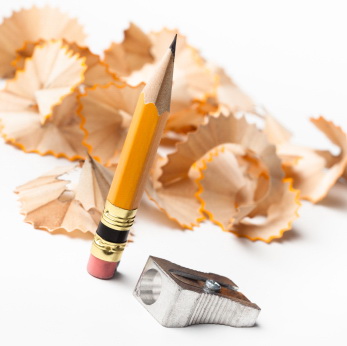 As a recovering perfectionist, this is a place I can still struggle. When is good really great and I just don’t recognize it? When is good enough, good enough? There’s an art to knowing. More importantly, there’s significant value in knowing. When I find myself struggling with what I call my “analysis paralysis” I have learned to turn to what I call my three “freedom” questions as a way to move beyond where I am.
Question #1: Will what I have get the job done? (If yes – it’s finished. If no – what is left to do? I then focus only the minimum steps left.)
Question #2: What will happen if I let it go as it is and it needed more work? (Usually – nothing. Sometimes – something. If something, then I close the risk gap but only that.)
Question #3: What was my original intention for the work and what is it costing me to not be finished? (This is often where I come face to face with where I’ve allowed my motivation to shift out of focus. With that lens adjustment, the need for results overpowers the need for false perfection.)
It’s pretty simple. It’s either enough or it’s not. It is also important to remind ourselves that perfection is a false measure. It’s not universal. It’s not evergreen. It’s not real. But let’s face it, we each continue in our own ways at times to pursue it. Let’s try a better way. Let’s make excellence our new perfection. Let’s dismiss that false taskmaster and focus instead on excellence by generating value for ourselves and others. It’s an amazing freedom. And in the end, produces higher quality work because we focus on specific, tangible, measurable and attainable standards.
Where do you pursue perfection? What would you be able to accomplish if you traded in perfection for excellence? Amazing things.
Live today like you want tomorrow to be. Live well.
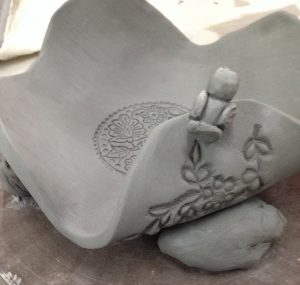 Balance and harmony are important in all areas of our life. When we talk about balance we tend to think in terms of balancing across each segment of our life but in truth, it matters within each of them as well. We need a balanced approach to health as an example and within our financial profile. Our personal network should be diversified and expose us to perspectives with range and depth. But balance only truly happens when we also have each area of our life in harmony with the rest.
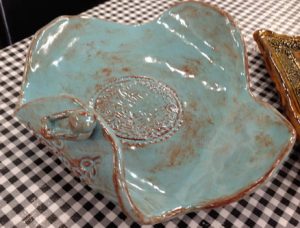 about three months into this latest adventure and I am now without question a lifelong enthusiast. The parallels to life are there every time I sit down at the wheel or work with the clay at the table. And the miracle of what happens with glazes and the heat of the kiln are incredible.
 As a strategist, one of the key areas where I work with clients is on saying no: How to say it, when to say it, why to say it. Michael E. Porter of the Harvard Business Review has even been quoted as saying that “The essence of strategy is choosing what not to do”.
 The advantages of reaching what I now call my “wisdom years” are many. But without question for me, one of the most delightful of those is being a grandmother.