Live today like you want tomorrow to be

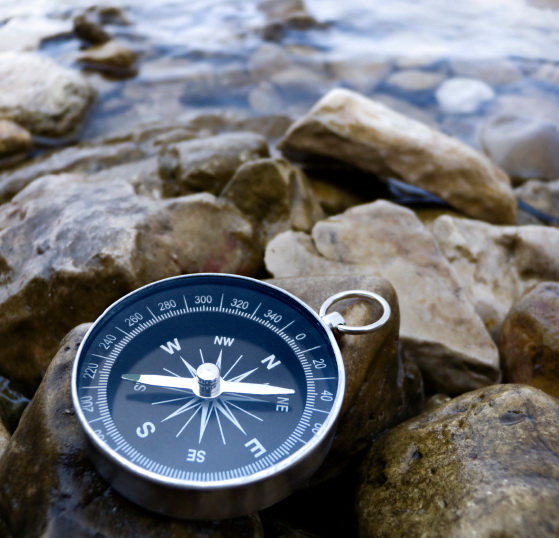
CompassThe title of today’s post has become my mantra over the past two years and forms the core of my coaching programs. I had always been goal oriented and personally driven, my eye to the future. That’s not a bad thing. Unfortunately though, it meant that I was always working toward something instead of being able to enjoy where I was in the process. Once I realized that the best tomorrows result from living them today my life became much richer.

I frequently check-in and re-affirm my connection and commitment to my personal manifesto that resulted from this shift in my centering. It is a reflection of my core values and the principles that guide my life.  As I’m continuing to enhance our coaching programs, I’ve been reminded again of the importance of having this level of personal awareness and commitment at the forefront.

  1. I aspire always to honor God in my thoughts, words and deeds.
  2. I have a responsibility to take care of myself and to live well.
  3. I am here to make a difference and enrich the lives of others.
  4. I recognize that what I do today is forming my tomorrow. I do not think about what might have been. I act on what will be.
  5. A curious nature is my most valuable trait. My most powerful tool for myself and others is the right question.
  6. I acknowledge that time is my ultimate resource. I do not try to manage my time. I set priorities and they determine how, where and why my time is invested.
  7. I do not think in terms of failure. I think in terms of effort and experience.
  8. I appreciate that a change of place is often the best way to change my perspective.
  9. Outside of universal laws, the only rules that apply to me are those that I have accepted. By accepting (or not accepting) any guidelines, I am also accepting responsibility for my choices.
  10. I understand that fear is not a bad thing. Fear is a healthy thing. It is the ultimate expression of respect for what I am undertaking.

No matter where we are in the journey, we must live today like we want tomorrow to be. It is in fact the only way to achieve it.

Live well. Live today.

 

Encore: Lessons from the repair of an old photograph


In January of 2014 this encore post was published for the first time. The video re-surfaced this week and once again, the lessons spoke to me. Life lessons are all around us. We only have to look and be willing to see. I’m grateful for that gift. I hope that the insights are meaningful for you. #12 remains my favorite. Enjoy.

************************************************************************************************************

Old photosI remember as a girl spending time working picture puzzles.  Find the hidden pieces. What is wrong with this picture? Find the differences in these pictures. And so on.  My analyst genes were already showing and these were some of my favorite games to play.  I loved searching to find and studying to analyze.  Even as a young girl.

That early interest stayed with me and is now part of my core strengths. Working with business data for many years and being able to see the story it told and then use that information to once again “find the hidden pieces”, determine “what’s wrong with this picture” and even see differences and find best practices and other fundamentals remained some of my favorite games to play.

Working as an author, this has become even more present for me in the way that I see things and assimilate them. A picture, a sound, or the arrangement of them can and does become a writing prompt because of the thoughts that they inspire. It isn’t so much a “moral of the story” as it is the “meaning of the moment” for me, although often there is a moral in there. I’m sure you have experienced the same thing yourself. Have you ever gone to the theatre with friends and watched a movie that you thought would be just entertainment and come away changed? Or read a book that moved you to another dimension you didn’t even know you had in you? Those experiences are very much in the same vein as those games because we are looking and experiencing beyond the surface activity. We are allowing ourselves to experience something deeper.

Today’s offering includes a video that is a time lapse recording of a master at work. The subject is the repairing and colorization of an old photograph. As I watched it the first time, I was completely captivated with the science and the art of what was unfolding.  As I watched it a second time, the sub-text began writing itself for me as lessons we could learn from the repair and colorization of a damaged photo. And I knew that my muse was with me.

These observations on my part will make much greater sense to you if you watch the video first and then re-watch it after reading the list.  Then after watching and reading my list, look for what your lessons might be. What would you add to the list?

I hope that this inspires you to recognize that so often what we need to see is in fact hidden within the picture.  That sometimes things just need to get put into their proper place (perspective) and often, the most subtle differences make the biggest impact.  Enjoy!

  1. Clear the way for the subject to shine (clean up the context first)
  2. Frame the focus (get the boundaries right)
  3. To check yourself, you’ll have to zoom in and zoom out (get the perspective right)
  4. Be patient (mastery takes time)
  5. Repair before you enhance (the color happens last)
  6. There is always a part of the process that’s harder (don’t give up)
  7. Some adjustments may be required (the first approach may not work, another one will)
  8. Once you’ve done it once, it’s easier (re-use the work and the lessons)
  9. Shadows create depth (why do we always forget this one?)
  10. Sometimes what appears to be an imperfection is just a stroke away from perfection (time can take its toll but it cannot erase the beauty)
  11. Mastery is what makes it look easier than it is (talent may begin it, but skill finishes it)
  12. Leave what you touch better than you found it (don’t settle for just fixing it, make It better)

Power M&M’s: Motivation & Momentum

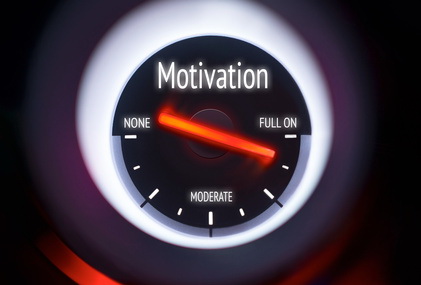
Motivation ConceptDeciding what you want, even how to get it is only part of getting you to where you want to be.  To be successful there is another element required: Knowing why we are doing what we plan to do.

Without understanding why – we will lack the motivation needed to sustain us through to success.  If we can’t keep going – we’ll soon stop going. Knowing why we are doing something is the glue that holds everything together.

How does motivation work? While there are many illustrations, it comes down to these 5 essential principals:

  1. Sometimes the work is hard. It’s really that simple. Sometimes the work is hard. And we need to be certain we can stick with it. Jim Rohn taught that when the promise is clear, the price is easy. When the price begins to get hard, the promise is what pulls us through.
  2. Sometimes the work takes time. The emotion of the moment when we committed to something can and will fade over time if we don’t bring it back, even if not at the same sensory level. I was recently reminded that there is very little that is action dependent that does not require some constancy, even daily re-commitment to that action. Whether it’s our health, money, work or relationships. Our motivation (why) is what creates the power we need to keep making the commitment over time.
  3. Sometimes the work needs to change. This is an important one to think about. Sometimes the method we choose to do something doesn’t bring us the result we wanted. That’s not failure. That’s experience. Without knowing why we were doing it in the first place, we don’t have the ultimate creative pool to work from for finding our next strategy and getting it in place. The why keeps us focused in the RIGHT direction, even if we change the vehicle we’re riding to reach the destination.
  4. Sometimes the work requires help. When we are clear about why we are doing something our enthusiasm and passion are evident and infectious. Others will not only respond to requests for help – they will volunteer! There is nothing more binding and bonding than a shared desire to transform something for good. Even if they don’t know, like and trust you yet, if your why is clear and they can align to that, it can actually be the catalyst for the best relationships.
  5. Sometimes the work requires a choice. This point goes beyond the first one where we talked about work being hard at times. This is about sacrifice. This is about choice. If you do THIS (something that honors your why) then you cannot do THAT (something you really want to do!). The promise being clear is still part of the rationale on this but it goes deeper because you are making a conscious choice to not only have something, but also to give something up. If the value equation isn’t clear, those choices can get very difficult.

Having the right motivation makes a difference getting started and staying started, because we can and will have more than one start along the way.

Choose one area of your life (health, finances, work, relationships, community) where you struggle staying on track with your goal and action settings. Go through a series of questions focused on the word why to get to your core reason for what you are doing. That is the promise. Don’t take your first response. Why? Because chances are fairly high that it is not your real reason. Don’t be surprised if it takes you a number of times to get to your true motivator. In the words of Pat Riley, “A champion needs a motivation above and beyond winning.” You’ll know you are there when you can take that reason and ask yourself these questions:

  1. Is this reason strong enough to keep me going when it’s hard?
  2. Is this reason strong enough to keep me going when this takes a long time?
  3. Is this reason strong enough to challenge me to always find a way?
  4. Is this reason strong enough to allow others to see the value in the work?
  5. Is this reason strong enough to support the right choices along the way, even when it means a sacrifice?

When you get to five yeses – you are there! More importantly, you know you’re going to be able to begin and experience the journey to go to your desired place of achievement with joy and ease.

Live well. Live today like you want tomorrow to be.

3 Steps to a Healthy Mindset

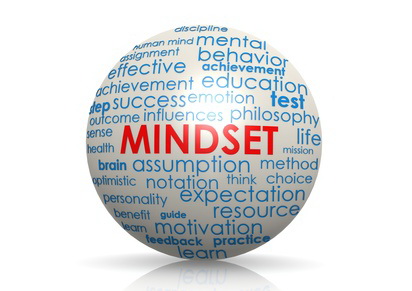
Mindset sphereOver the course of my life I have invested thousands of hours researching how people are able to effectively grow and change.  After all, we know that success leaves clues and being able to grow is the most elemental change we can experience in our lives.

My study of success included hundreds of interviews, listening to recordings from thought leaders and reading scores of books written by experts on change and personal development.  It has also included observation within my own life and working with clients as a life coach.

My conclusion? Everything begins and ends with our mindset.

Earl Nightingale stated it this way:  “We become what we think about”.  Jim Rohn taught that before you can accomplish anything you must first believe it is possible and then believe it is possible for you.

One of William James’ most quoted lines is this: “The greatest discovery of my generation is that human beings can alter their lives by altering their attitudes of mind.” And from the Bible in Mark 9:23: “If thou canst believe, all things are possible to him that believeth.”

It’s clear that unless we believe, we are not going to achieve.

Given the importance of mindset, how do we proactively create one that is healthy and in tune with our vision and mission? I believe that there are three essential steps that make this possible.

Step 1:  Make peace with the past.   Here is where we usually trip up first.  We limit our future based on our past.  Our past is meant to prepare us for the future, not predict it.  In fact, some of the greatest achievers now and from history are those that have used challenges in their past to propel them to a better life.  We must make peace with our past.  The steps for that can vary but in essence, it involves achieving a state of grace through forgiveness of ourselves and others so that we can live from a place of gratitude.

Step 2:  Be honest about the present and take responsibility for it.  Personal responsibility is a significant factor for personal growth.  As long as we play the blame game, we are in fact imprisoning ourselves as a victim.  We live “at the mercy” of circumstances or other people.  Once we are honest about where we are and take responsibility for our life and everything in it, we are in actuality empowering ourselves to change it.

Step 3:  Act based on faith in the future.  It is not enough to have hope.  Hope means we “might” succeed. It’s enough to start, but it won’t be enough to finish.  Faith means we believe that we will.  It means we won’t accept anything less.

Three steps to a healthy mindset.  Sounds simple and yet it isn’t always easy.  Because we’ve had years of practice thinking the way we think now.  We’ve had years to let limiting beliefs and judgments cloud our vision.  But it’s where we must start.  We must set a new mindset.  A new expectation that we allow to become a core belief

Think about this for yourself.  In what area of your life would you most like to experience growth in the next 90 days?  What growth would you like to see?

Do you believe it’s possible?

Do you believe it’s possible for you?

Then you’re ready!  The first hurdle is behind you.  If not, I’d like to help.  Because you matter to me.  And your life matters to others as well, now and for many generations to follow.

Think well to live well.

3 Responses to Greener Grass

Green grass and earth BackgroundAn essential component of an effective personal development plan and strategy is surveying the “landscape” looking for growth opportunities.  We scan to find value we can integrate into our own lives and model for others.

But the truth is that most of us are doing this even apart from any strategy for personal growth.  It can be difficult to avoid what is around us when information is pushed at us from every direction using every available media and means.

So what happens when we measure ourselves based on what we see in others? It depends. This kind of comparative approach can serve us by pushing us to stretch ourselves, or limit us if we fail to recognize the good in what we already have or believe something is beyond our reach.

Like anything though, we need more than platitudes to create change.  We need to have a personal strategy that allows us to process information in a way that generates positive change for ourselves and, as a result, for others.

Here are three responses to consider when you stumble upon that “greener grass”:

  1. Remember that not everything is about you or for you.  Sometimes it is best to be the audience and congratulate the other gardener!
  2. Whenever you feel a response that has an edge of personal dissatisfaction in it, pause and name 10 blessings in your life.  Focus on your good.  Keep perspective.
  3. Remind yourself that there is NOTHING you cannot have if you are willing to pay the price.  The price is rarely $$’s.  It’s almost always about our daily life and the disciplines we honor.

Is the newest object of your desire worth the price?  If so – claim it.  If not, see option 1.

Final thought:  Remember that every time you see something that seems to be “greener” that there are others looking at you and seeing “greener”, too!


What happens in your “G” zone?


G zoneJune has been an electronics month at my house. Computers, laptops, tablets, smart phones – it seemed like all of them decided to revolt this past month for someone in my family. Researching what was available in today’s market turned into a much bigger project than I expected. Checking compatibility, connectivity, capacity – even the smallest of devices had to meet a pretty robust list of requirements.

Beyond all of that, the environment is also a factor in addition to portability for our increasingly mobile lives. How well will it operate when conditions aren’t ideal? And what is going to happen when in all of our rushing about through our day it slips from our grasp?

In the end, that seemed to be one of the most critical factors. Because we need something to work the way our lives work and to reliably function even when faced with unpredictable circumstances. This prompted some thoughts for me around how prepared we are ourselves to withstand the extremes and shocks of life. Our experiences have taught us to be prepared.

Just as the manufacturers of these devices have done, we need to look at the greatest risks and mitigate or counter them with a ready response.

Where are we at risk the most? For me that has proven to be similar again to what I found reviewing these devices. I am most at risk when there are external things going on that affect my personal space and I’m not prepared mentally, spiritually and emotionally to deal with them. The answer then is to be prepared. And to prepare in such a way that the response is automatic. No extra handling required.

The optimal response is something already built-in to how I function. If we can recognize a response, we can manage it and move it to something healthier and happier.  Whatever the trigger, the response can be one that serves us even as we serve others.

It is what I have come to think of as the “G” zone.  We have options here in this place. We can respond with Guilt, Grief or even Greed. Very human reactions in life. I take the blame, experience the loss and crave more. It is usually when life has thrown us a curve ball that these responses appear. Let’s face it – we cannot escape these. Not really. But we can learn to counter them so that within that “G” zone we can find our way through wiser and richer than when we entered.

Here is how:

When Guilt appears, counter with Grace.

“It is a hard thing to let go of mistakes we’ve made and sins. God wants us to do that because He knows the guilt and the condemnation will keep us from becoming who He has created us to be.” (Joel Osteen)

When Grief appears, counter with Gratitude.

“We can complain because rose bushes have thorns, or rejoice because thorn bushes have roses.” (Abraham Lincoln)

When Greed appears, counter with Generosity.

You can have everything in life you want, if you will just help enough other people get what they want.” (Zig Ziglar)

How well we manage our “G” zone will directly impact it’s long term affect. Its presence is a gift because it is there that we grow to know ourselves at our worst and at our best. We can emerge bringing grace, gratitude and generosity to the world.

Live well.