From hope to faith…part leap, part tight-rope

Tight Rope WalkIf you want someone to act, give them hope.  That is the cornerstone of every effective marketing plan in existence.  Regardless of seller or buyer or product or idea, for us to act, we need to have sufficient hope that there will be an outcome that we want.

By definition, hope is the belief that something “can” be true or “can” happen.  It is possible.  It may not be probable but it is possible.

And we want that assurance before we invest ourselves. Before we do the work. Because some work is pretty daunting.

So the greater the hope, the greater the chance will be that I will actually take the necessary steps and make the sacrifices.  There is a price for every promise after all.

But how is hope different from faith? It’s subtle but important. And it is what will make the real difference.

When I have hope, I believe it can happen.  But when I have faith I believe it will happen.  That’s true motivation.  And that is why faith is not just about the initial leap.  It is walking the tight-rope of life knowing you are going to make it through.

Hope can help us take the first step, but only with faith will we be able to keep walking.

I’m not as careful with hope as I am with faith.  Hope is easy.  Faith takes work.  But faith is where the promise comes true.

Where do you need to take the leap and get on the tight-rope of faith? Are you ready to go from “I can” to “I will”? Once you are, before you know it, you will say “I have.”

What I love about the process is that the more we do this, the easier it gets to really believe and have faith in what we can do – the difference we can make not just in our own lives but in the lives of others and ultimately in the world.

Ready to get started?
 

What flavor is your fear? A guide to how fear can serve us

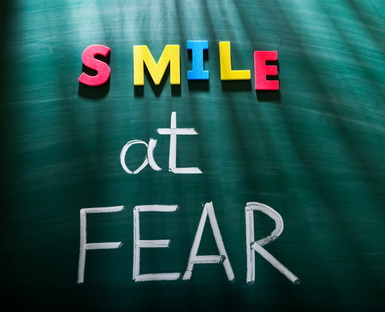
Smile at fearRecently I experienced a situation where fear was an unexpected partner in the dance. Not in an obvious way, but definitely present. In fact, I doubt that anyone involved (including me) recognized at the onset that fear was part of the situation. That troubles me because we will not change what we cannot see. And we won’t see what we are afraid to see.

There it is – FEAR. I have been reminded that to be successful personally and professionally, one of the core things we must develop is a healthy relationship with fear. Why? Because fear can be a positive energy, a partner for change.  But before that can happen, we need to engage fear as our ally.

The first step is to recognize that all of us experience fear. Every day. Let’s get some clarity about the many faces and flavors of fear. As I was researching this I found at least 45 synonyms for the word fear from one search.  45! That’s quite a few flavors. And when you move on to all of the additional terms and phrases, the list is literally endless. That tells us something. We get to choose some things about fear in any given situation. We get to put a specific name to our fear. Once we do that, it becomes easier to see it within a context that will allow us to counter and/or leverage it.

The second step is remembering that fear is a basic human response. We are born with fear as a primal response in recognition of danger and for self-preservation. Over time, we allow fear to become the danger itself and to be come self-limiting.  We need to remember that fear is not an absolute predictor, fear is just an alert mechanism that tells us we need to look at something before making our choice. Going back to our first point though, remember that in this context, fear does not have to remain a reflexive response. Fear can create choices in how we respond. As with any choice, once we recognize we are in a decision moment we know by default we have the power to make a different choice.

To help better demonstrate this, let’s look at 10 of the “flavors” of fear and an alternate choice for each of them:

Fear Power Response   Personal Power Response
anxiety   vs. calm 
aversion   vs. kindness
concern   vs. contentment 
doubt   vs. faith 
dread   vs. courage 
foreboding   vs.
assurance 
suspicion   vs. trust 
timidity   vs. confidence 
unease   vs. ease 
worry   vs. happiness 

Now on to our guide for making fear our ally.  Fear is an incredibly powerful emotion, even in these forms. It can distort our vision, perception and ability to act. In some cases, the fear is clearly invalid and we are able to just choose another response. But in most cases, we will need to engage with our fear and allow it to guide us back to our personal power. That is done using the right questions.

For example, if you are timid in certain situations it won’t be as simple as “I will choose confidence over being timid”.  Most likely, there is an underlying reason you are timid. The key will be to ask yourself what steps you need to take to develop confidence. Instead of focusing on the fear (being timid), focus on the alternative (confidence). First you will have to identify where you lack confidence. You will be able to look at what kinds of situations bring out that timidity and determine why. With that, fear becomes your ally. It allows you to see where you lack confidence, take the necessary steps to restore confidence and then thank your fear for its service and send it on its way!

Each one of the words listed above can leverage this process. Let’s look at unease. What is it about this situation creating unease for me? Are those things true? If so, are there steps I can take to be at ease? If so, what are they.  Take those steps, thank your fear (unease) for its service and send it on its way! If you cannot define steps that will help you feel at ease, recognize your unease as a “do not enter” warning”, thank your fear (unease) for its service and send it on its way! Over time, this becomes a more automatic reflex action for you.  Just remember that skill grows from use over time, not time alone. Put this into practice!

When we embrace fear for what it is meant to be – an alert to potential danger – we can leverage it to change outcomes and set ourselves up more effectively for success.


The Power of Words: What inspires you?

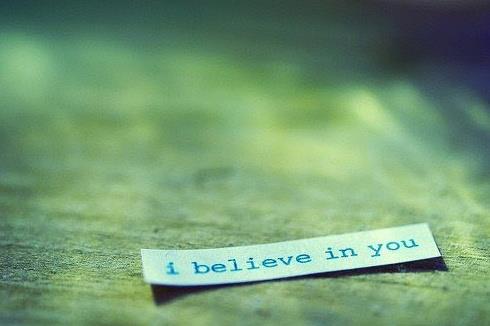
We all know that when someone tells us that they care about us it makes a difference. It can soothe us, create a sense of security and even contribute in some ways to our own sense of value.  There are, however, some sentiments that are even more powerful and can inspire people to take action and greater leaps of faith.  And that changes their life.  Four of the most powerful words we can offer someone to inspire them is to simply tell them:  I believe in you.   Hope and faith – two of the most powerful forces in the world.  And we have the power to inspire both so easily.

Let me start:  I believe in you.

Pass it on…

Believe in you


3 Keys to a More Satisfying Life & Work

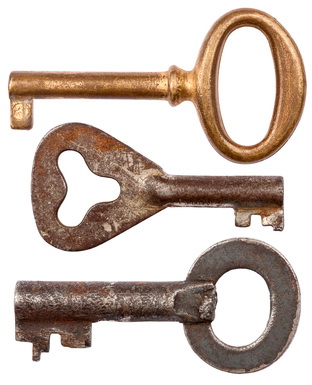
Old keysMultiple studies have shown that over 50% of people no longer find satisfaction in their life or work. In fact, they are becoming increasingly unhappy. While specific reasons vary, they generally fall into one of three categories:

1-  They no longer feel like a meaningful contributor;

2-  They are no longer comfortable taking risks;

3-  They did not plan to be where they are at this point in their life.

What about you?  On a scale of 1 to 10 – where is your life-work satisfaction meter registering?  If you are in that 50% that is dissatisfied, it is time for you to look more closely at your situation and determine what steps you can take to reclaim satisfaction in your life and work.

There’s another facet to realize about these three indicators and how they each can accelerate the others. Are you in the first group but find that the second point keeps you from taking action? Or perhaps you are in the third group but due to the second point, you are settling for far less than you can accomplish.  You see, these really do go hand in hand. Think of them as gears, one turns the other.  Not satisfied with what you are doing?  Too unsettled to fix it? Feeling trapped and without choices?

If this is you, the first step is going to be to take responsibility for where you are and stop allowing yourself to fall prey to victim thinking. I can share with you that when it was first put to me in those terms, I was insulted.  In fact I reacted badly until I realized it was in fact true. I was allowing myself to be held hostage. I was a functioning victim of the economy and settling for someone else’s idea of how to define and deal with risk in my own life.

So what can we do about this?  Consider with me these three basic keys to going from dissatisfied to satisfied:

  1. Commit to total honesty & self awareness
  2. Commit to being open to a new way of seeing everything
  3. Commit to taking responsibility and action

That’s it – three key ideas to consider.  If you are willing to make those three commitments, then get on board.  Your journey is about to get interesting and yes – satisfying.  Always remember, there is more value in the rest of your story than you ever dreamed possible. And if a different perspective would be helpful, we’re always here to help as your possibility partner.

Live well. Live today like you want tomorrow to be.


What seeds will you plant today?

Planting SeedsIn his teachings,  Earl Nightingale talks about each of us being like farmers and compares our lives to their plot of land.  It is up to us to cultivate that land, to plant the seeds, to weather the storms and to bring in our harvest.

Whatever happens above, under and around our plot of land happens to everyone.  If there’s rain – it rains on everyone’s land.  If there is a draught – everyone has to deal with it. How the farmer prepares the land determines how those universal events effect it in many cases. Land can be cultivated so that it has the right elevation for drainage.  It can also be irrigated with alternate hydration sources.  Those are decisions (and investments) the farmer makes in the land in order to give it the best possible chance to produce the crops desired.

The farmer also must decide what kind of crops he (or she) wants to harvest.  After all, what comes up from the ground is going to be determined by what they put in the ground.  We can’t be surprised if we get get wheat instead of corn if we didn’t plant corn seed.  We shouldn’t expect an oak tree if a pecan seed is what we planted.  But that is quite often what we do with the plot of land called our life.  We want a certain outcome (crop) from our life but we don’t plant those seeds.  Then we are disappointed when we get a result we didn’t want.

If we want sustaining health, we must plant seeds of health.  If we want abundance financially, we must plant seeds of financial health. If we want a masterpiece life, we must plant seeds of mastery. Whatever you want from this experience we call life, you have to plant those seeds and allow them to grow.  A good friend from my college days experienced her final days here on earth this past week. As I read all of the posts from those that have known and loved her over the years since our time together it was clear that the seeds she planted were of excellence, warmth, love and faith. What a special reminder to those with days yet ahead to take care with  “seeds” and both select and plant them well.

It remains fascinating to me that within the seed, there lies the potential of a forest.  Just as the potential of our lives, begins with our days. What seeds have you planted? Are they going to bring the life forest you desire?

A new approach: Thinking “inside” the box..

Inside Your BoxAs a life strategist, one of the places I see people struggle is recognizing who they are and the gifts that are already theirs to claim.  There is great pressure to look outward and to “think outside the box” in pursuit of a “better you”.  So much so that we forget to examine “inside the box” first and see what we may already have within our grasp that can be used to propel us into our true purpose.

One of my favorite exercises we go through is an inventory of knowledge and skills.  The challenge is to take your age and come up with at least that many items of knowledge or skill that you have demonstrated in the course of your life.

The first half is typically very easy for us to record.  The next group might take some thought but we can typically come up with it.  It’s that last group of 15 – 25% that seems to stump us.  But in almost every case, the real gems come from that group.

Since this pattern proved out time and time again, it intrigued me.  I began to look deeper at why this might be true.  It seems that what we have most enjoyed in life about ourselves we tend to think of as “less important” because it may not be associated with our professional life and endeavors.  We operate from the misconception that what we most enjoy is a “sideline” or “hobby” or even something we do “just for fun”.  In truth, quite often it could become more central in our life, even be the secret ingredient for creating our most purpose-driven work.

When we start from where we are with the idea that we already have abundance within ourselves, exploring “inside the box” takes on new meaning.

What about you? If you are dissatisfied with your life, perhaps it’s because you’re focusing on what you don’t have – what is “outside your box”.

Try a new approach.  Take inventory “inside your box”.  Re-focus on what you have and what it can mean to you for building a richer, more satisfying life.

Of one thing I am certain.  You are going to find a gift.