What is easier than you think? Having it all!


Most of us have given it thought.  Most of us have even talked about it, dreamed about it.  But if pressed, most of us would probably admit that deep down, we don’t really believe in it.

What am I talking about? The idea of having it all:  Great health, a vibrant community life, a nurturing intimate circle, meaningful work, a secure future. Somehow, we’ve accepted the limitation that something has to give.

Certainly this was the case for me. But my belief did in fact change. And once the belief changed, everything changed. The change in my belief didn’t happen as a starburst.  There was no magical moment.  No wands were involved!  In fact, assembly was required. Because before I could get to that place of knowing, I had to be willing to let go of some very comfortable excuses.  And I had to re-focus myself in areas that supported a better result.

Think of it like being a farmer.  Our life isn’t the plants, the rain or the sunshine.  Our life is the soil.  We have to get the soil right before anything else can really flourish. Oh a few plants can come through, even thrive.  But they have to work so much harder and they zap all of the available energy resulting in a very sparse garden. I learned that if I focused on taking care of the soil, the rest became much easier.

How exactly do you do that? It’s not what you might expect.  It certainly wasn’t what I expected.  But I did find 5 keys that are serving me and the results have really been astonishing.  Curious? Good! That is one of the keys!

keysThat’s right! The first key is to have a curious expectation.  When you have a curious expectation, you are anticipating.  That means you are scanning and searching and moments that matter are not going to pass you by.  You were looking for them.  You expected them.  Even before you knew what they would be.

The second key is to practice having a joyful response to everything in life.  That can be a tough thing to do.  Not everything that happens around us is wonderful.  Everything does, however hold the potential to bring something wonderful for or from us.  And there is the joy.  If we see the thing that happens as a bearer of a gift, we look past the pain to see the gift.  Gratitude is another way of describing this.  But it’s an essential key.

There you have the foundation: curious expectation and a joyful response.  Perspective and mindset.

What’s at the center? The third key is being connected in the moment. This is what I believe is the essence of what we think of as balance in our life.  If you ARE wherever you are, then you are balanced.  You are aware, you are centered and you are actively engaged.  That’s balanced.  Balance isn’t that everything is equal.  Balance is that everything is working together.  It is also the epicenter of “having it all”.  What is the point of having anything if you can’t experience and enjoy it?

What is the key to connecting? Consider that it just might be disconnecting.  That’s right.  You can’t be where you are if your mind or your heart are somewhere else.  I once heard someone say that for a vacation to be a real holiday, it needed to be more than a change in geography.  So true!  If you are just physically showing up, then you can’t possibly connect to where you are.   This is written here from the perspective of place but it applies across relationships as well; personal, professional and everything in between!

The last two keys are a bit more pragmatic but just as important. The fourth key is to begin early and the fifth key is to develop sustainable energy.  You need to start early and be able to go long.  That takes energy.  Going back to our analogy of life as the soil, it means there has to be some slow release nutrients involved.  How do you do this? By taking care of yourself first.

In Robin Sharma’s success programs, one of the actions he encourages people to take is to start their day at 5:00 am.  My initial reaction was skeptical.  I didn’t see how that would make a difference; we’re not all morning people after all.  What I’ve learned is that it’s less about the hour and more about the sacredness of personal time.  Most of us do start our days at 7:00 or 8:00.  And we’re starting when everyone else is starting.  It’s much more challenging to protect that sacred space we all need for thought, for introspection, for prayer, for centering.  Following his advice, amazing changes started happening with my productivity and my overall sense of well being.  Why? Because I had created that space for myself and let my own vision create the day before it began.

The power that comes from that personal focus also delivers a longer burn for energy.  But we still need to keep the fires going.  And that’s where our personal habits come into the equation.  When we eat well, when we move, when we rest well – all of that works together to make our bodies run efficiently.  Unfortunately, it’s one of the first places where we deny ourselves.  We don’t “have the time” or “the money” or “the energy”. Sound familiar? I didn’t think I did either.  Until I ran out of all of them because I didn’t take the time, invest the money or cherish the energy.  There is nothing more precious we can give ourselves than the energy to do the things we want to do; the things we must do.

These are my five keys. Perhaps they are yours as well.  If you already “have it all” I salute you.  But if not, here’s my challenge: pick just one and work on it over the next 30 days, see how things shift for you.  Imagine that you have it all now but that the picture is just out of focus so you can’t see it.  With each of these five keys, you sharpen the focus. Once focused, your life is exactly the vision you imagined it could be.

Crave what’s next, practice gratitude, be connected, start early and take care of yourself along the way.

Sound good? It’s going to feel even better!

Enjoy the journey.  Begin now. Live today like you want tomorrow to be.

 

Do you know what your values are? Are you sure?

We all have our own value system that directs our thoughts and actions.  Some of those values are inherited, some are the result of significant experiences and some have developed over time from study and observation.  Jim Rohn, one of my early mentors, taught me that this is a key area for introspection and is at the heart of personal development.  I agree.  He taught it this way:  Make certain that whatever you (think, believe, do) is the product of your own conclusion. Be a student but not a follower.

When I first heard that statement it was one of those epiphany moments for me on my own journey.  I began re-examining much of my own core belief system.  It wasn’t that there was anything essentially or fundamentally wrong with what I said I believed – the problem was that I needed to understand and affirm why those were my beliefs.  And some of the beliefs changed.

Part of the changing had to do with how I defined values.  I have come to think of it as my philosophy of life.  We must be constantly growing and evolving in our philosophy.  But the essence of that is this:  Our philosophy is everything we know and have experienced (UP TO THIS POINT) boiled down to what we believe is important.  What matters.  It will show up in our actions – not just in our words.  And it will influence every decision we make.

Here’s an exercise that will help you see how to work through this for yourself:

Step 1:  Make a list of everything that is the essence of you – your talents, your abilities, your knowledge, anything valuable to you.  There isn’t a definite number for the list but make sure you’ve captured everything. Make sure that these are about you and your life experience.

Step 2:  Imagine that each of the items on your list are represented by coins in a bag that you carry.

Step 3:  Imagine that you have started on a trip going to a destination that is very important to you – in fact is the most important place you believe you will ever visit in your lifetime.

Step 4:  Now imagine that you have come to a door and there is a fee to pass through the door in order to continue on your journey.  The fee for entry?  30% of your coins.  You must decide first if you are willing to sacrifice any of your coins.  And, if so, which coins you are willing to sacrifice in order to continue on your journey.  What would you do? Which values would you release? Let’s assume you paid and continued…

Step 5:  Your journey resumes and you begin to notice that the load you carry is lighter.  Those coins don’t seem to be anything you miss.  Interesting. You’re pleased with your decision.

Step 6:  There’s another doorway ahead.  And there is another fee.  Just as before – you must sacrifice another 30% of the coins in order to continue.  That’s 60% of your attributes, talents and things you value that you will have given up to get to that ultimate goal.  Another decision.  Do you make the sacrifice?  If so, what are you willing to give up?  Once again, the pull is great, let’s assume you continue..

Step 7:  You start back on your journey but this time although the load is lighter, you begin to wonder what else might be in store.  But the prospect of getting to your destination is powerful.  And you continue on.

Step 8:  Up ahead you see another door and your anticipation has no bounds.  You just know this is it.  You have arrived.  But as you come to the door, the gatekeeper appears again and demands another 30%.  But that will only leave you with 10% of your coins. Only 10% of what you value will remain.  Are you willing to make that last sacrifice to get to the prize?

Far too many of us stop right here.  We believe that last sacrifice demands too much.  But what happens when we are willing?

Step 9:  You decide on the last 30%, make the sacrifice and you pass through the door.

Step 10:  You indeed have arrived.  But with only those valuables (values) that truly matter.  You are now free to move within that paradise destination unencumbered and uninhibited by all of the things collected over the years that in the grand scheme of things you realized were not important.

—————-

I go through this exercise now at least once a year. Why? Because my philosophy continues to change which means my values are changing.  That means that I need to adjust my sights to stay in alignment with my values.  I also check -in on that “dream destination” and make sure that my motivation levels are still strong and unwavering.

What is the value of values? If you don’t know what you value, you will always struggle because you will always be at the mercy of the values of others.  You cannot give what you do not have.  If you do not have values, you cannot give value.  Making decisions becomes almost impossible.  What basis do you use?

Knowing and protecting your values is a good starting place for change.  For growth.

When the glass is full – is there room for more?  Yes.  But only if you make room for it.

Live today like you want tomorrow to be.

 

What will you do today? A jelly bean life…

Jelly BeansMuch of my professional life has been spent working with some kind of data analysis.  Even the most abstract scenarios will have some kind of profile that will allow you to create a model of that information. Those numbers tell a story.

The same is true of our lives.  When I first saw the video being shared today I was intrigued.  Then I watched it again and I realized that in life, as in business, sometimes it is not so much what we know as much as it is when we know it.

The timeliness of information is crucial for one reason only.  It impacts our decisions.  When we have information at the right time to use for making smarter decisions everyone benefits.

And that is the value of this video.  The days of our life illustrated by jelly beans.  Sounds pretty silly.  But the story is anything but.  When you see the way time is swept off the screen and think about it’s true value, you become far more protective of where it goes and how it is spent.  Or at least that was my response to this. You can make better decisions.  About your life.  About your day.

Because having the information is only valuable if we apply it.  In business and in life.

Watch the video.  Then you will see the point of the question.  What will you do today?

Live today like you want tomorrow to be.

 

A new world of chain reactions

Paying it ForwardOne of the ideas that has intrigued me recently is how we as a society have adopted and are participating in activities designed to create a chain reaction. It’s really not a new concept but for a very long time, unless we were talking about a domino game it wasn’t something we intentionally set out to create.

And yet today we do.

Whether it’s paying it forward at a Starbucks window, taking on an ice water bucket challenge in support of ALS awareness or inviting friends and families to create gratitude posts on Facebook as examples, we as a society are actively looking for ways to join with a cause and make our world a better place.

What is creating this force of good? From what I have observed, it stems from three fundamental shifts that have impacted all of us. First is the  increased recognition that regardless of how different we may be, as a human race, we universally share the same hopes and dreams, and yes, even fears. Technology has created more than a global economy. It has also created a global neighborhood.  Instead of being limited to watching life go by from our front porches we are seeing it from the pages and screens of social media platforms and digital communities. This brings us together in ways we might never have imagined and allows us to appeal to each other’s basic humanity in ways we would never have dreamed possible.

The second part of this is that we’re able to readily see and share what happens when we take those steps to join in. That serves to fuel the fire for more. Imagine that if you just paid it forward at the Starbucks window and never found out you were number 498 in an ultimate line of over 700 as happened recently in St. Petersburg, Florida. You would still take satisfaction from having contributed to that one person but now you can know that you didn’t just impact one person, you were part of a movement in a single day that touched over 700 lives. That can be some pretty heady and “hearty” stuff. It also means that the next time you pull up, you might even be number 1 in an ultimate line of over 700 instead of number 498. We like being a part of good things.

The third component of this is that it gives legs to our hope that there is good in our world. The news is filled with so much heartache.  We need to know about that, too because we are a part of that as well. But when we have the chance to catch sight of that flame of hope for the good in all of us, it is rejuvenating. We can pause amidst the clutter and chaos and take in a moment that is really just about doing some good. Those moments can even serve to stop the chain reaction of some of the heartache.

How incredibly powerful it is to know that we can create good with such simple acts not just in the moment, but within the moments to come as our actions and examples create the genesis of so many more. The video in today’s post is a story board of this. As each person witnesses a kindness, they are inspired to create one of their own. And in the end, the world is a better place. All because someone cared enough to drop the first domino.

How about it? Let’s start some chain reactions in our lives and with our lives beginning today.

Live today like you want tomorrow to be.
Live well.

Live today like you want tomorrow to be

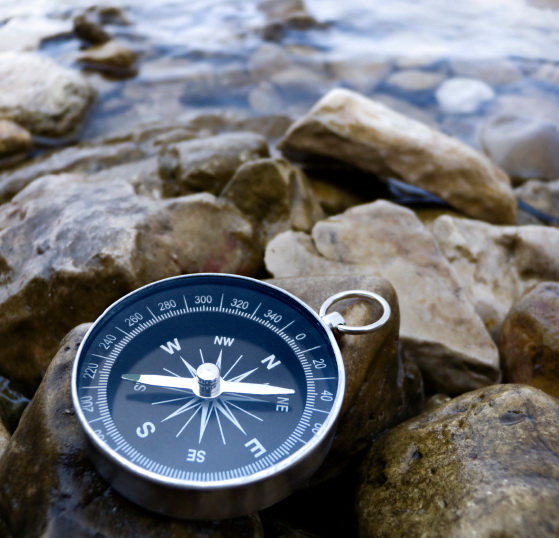
CompassThe title of today’s post has become my mantra over the past two years and forms the core of my coaching programs. I had always been goal oriented and personally driven, my eye to the future. That’s not a bad thing. Unfortunately though, it meant that I was always working toward something instead of being able to enjoy where I was in the process. Once I realized that the best tomorrows result from living them today my life became much richer.

I frequently check-in and re-affirm my connection and commitment to my personal manifesto that resulted from this shift in my centering. It is a reflection of my core values and the principles that guide my life.  As I’m continuing to enhance our coaching programs, I’ve been reminded again of the importance of having this level of personal awareness and commitment at the forefront.

  1. I aspire always to honor God in my thoughts, words and deeds.
  2. I have a responsibility to take care of myself and to live well.
  3. I am here to make a difference and enrich the lives of others.
  4. I recognize that what I do today is forming my tomorrow. I do not think about what might have been. I act on what will be.
  5. A curious nature is my most valuable trait. My most powerful tool for myself and others is the right question.
  6. I acknowledge that time is my ultimate resource. I do not try to manage my time. I set priorities and they determine how, where and why my time is invested.
  7. I do not think in terms of failure. I think in terms of effort and experience.
  8. I appreciate that a change of place is often the best way to change my perspective.
  9. Outside of universal laws, the only rules that apply to me are those that I have accepted. By accepting (or not accepting) any guidelines, I am also accepting responsibility for my choices.
  10. I understand that fear is not a bad thing. Fear is a healthy thing. It is the ultimate expression of respect for what I am undertaking.

No matter where we are in the journey, we must live today like we want tomorrow to be. It is in fact the only way to achieve it.

Live well. Live today.


Encore: Lessons from the repair of an old photograph


In January of 2014 this encore post was published for the first time. The video re-surfaced this week and once again, the lessons spoke to me. Life lessons are all around us. We only have to look and be willing to see. I’m grateful for that gift. I hope that the insights are meaningful for you. #12 remains my favorite. Enjoy.

************************************************************************************************************

Old photosI remember as a girl spending time working picture puzzles.  Find the hidden pieces. What is wrong with this picture? Find the differences in these pictures. And so on.  My analyst genes were already showing and these were some of my favorite games to play.  I loved searching to find and studying to analyze.  Even as a young girl.

That early interest stayed with me and is now part of my core strengths. Working with business data for many years and being able to see the story it told and then use that information to once again “find the hidden pieces”, determine “what’s wrong with this picture” and even see differences and find best practices and other fundamentals remained some of my favorite games to play.

Working as an author, this has become even more present for me in the way that I see things and assimilate them. A picture, a sound, or the arrangement of them can and does become a writing prompt because of the thoughts that they inspire. It isn’t so much a “moral of the story” as it is the “meaning of the moment” for me, although often there is a moral in there. I’m sure you have experienced the same thing yourself. Have you ever gone to the theatre with friends and watched a movie that you thought would be just entertainment and come away changed? Or read a book that moved you to another dimension you didn’t even know you had in you? Those experiences are very much in the same vein as those games because we are looking and experiencing beyond the surface activity. We are allowing ourselves to experience something deeper.

Today’s offering includes a video that is a time lapse recording of a master at work. The subject is the repairing and colorization of an old photograph. As I watched it the first time, I was completely captivated with the science and the art of what was unfolding.  As I watched it a second time, the sub-text began writing itself for me as lessons we could learn from the repair and colorization of a damaged photo. And I knew that my muse was with me.

These observations on my part will make much greater sense to you if you watch the video first and then re-watch it after reading the list.  Then after watching and reading my list, look for what your lessons might be. What would you add to the list?

I hope that this inspires you to recognize that so often what we need to see is in fact hidden within the picture.  That sometimes things just need to get put into their proper place (perspective) and often, the most subtle differences make the biggest impact.  Enjoy!

  1. Clear the way for the subject to shine (clean up the context first)
  2. Frame the focus (get the boundaries right)
  3. To check yourself, you’ll have to zoom in and zoom out (get the perspective right)
  4. Be patient (mastery takes time)
  5. Repair before you enhance (the color happens last)
  6. There is always a part of the process that’s harder (don’t give up)
  7. Some adjustments may be required (the first approach may not work, another one will)
  8. Once you’ve done it once, it’s easier (re-use the work and the lessons)
  9. Shadows create depth (why do we always forget this one?)
  10. Sometimes what appears to be an imperfection is just a stroke away from perfection (time can take its toll but it cannot erase the beauty)
  11. Mastery is what makes it look easier than it is (talent may begin it, but skill finishes it)
  12. Leave what you touch better than you found it (don’t settle for just fixing it, make It better)